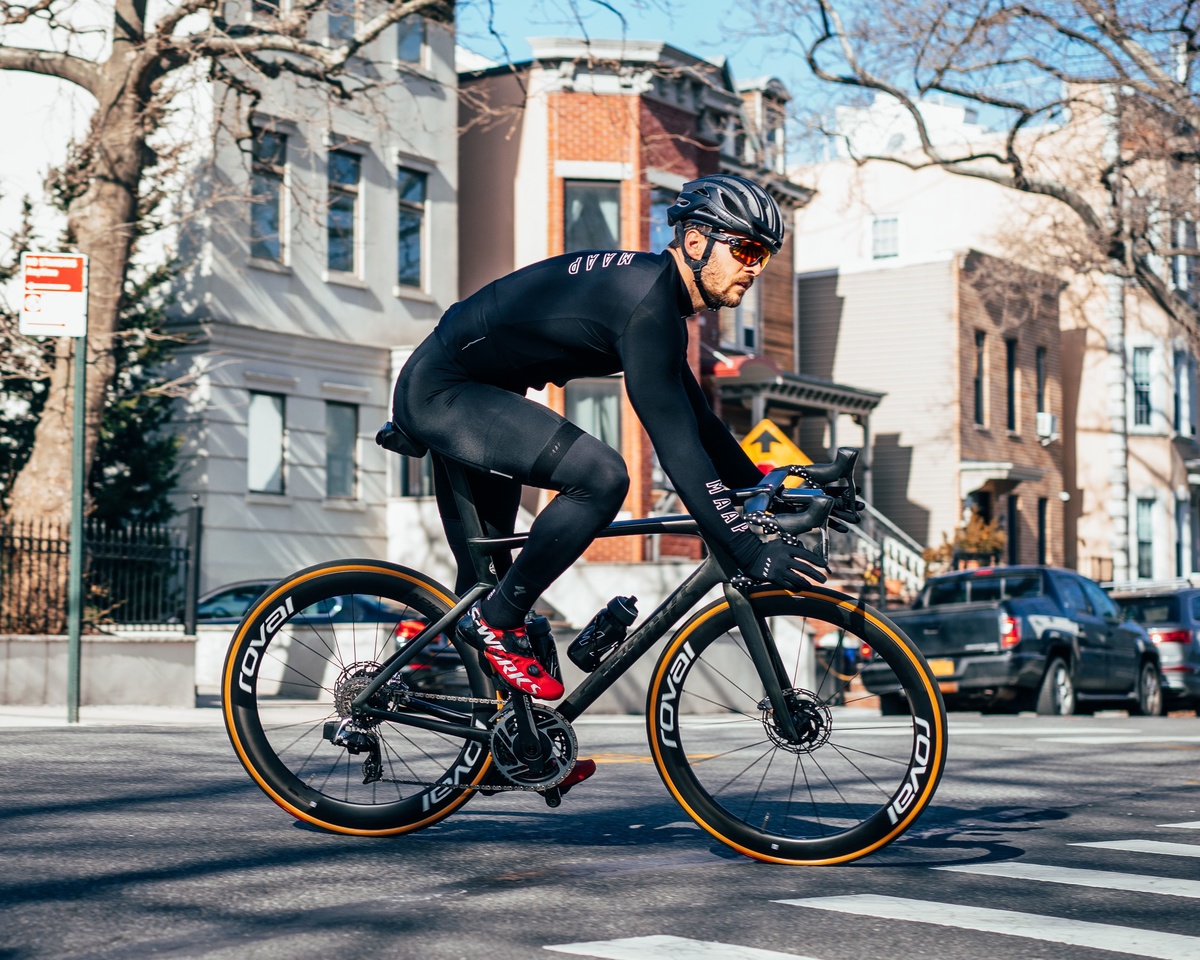
Whether you are buying your first road bike or have been riding for decades, one truth never changes: a proper bike fit is not a luxury. It is the single most important investment you can make in your cycling.
A good fit is not just about going faster, though it absolutely helps with that. It is about making the bike feel like an extension of your body rather than something you are fighting against. When your position is right, long rides feel natural. You settle into the saddle, your hands rest on the bars without tension, and the miles pass without your body demanding that you stop and readjust. When the position is wrong, the opposite happens: discomfort builds, pain follows, and problems that start on the bike, tight hips, sore knees, lower back strain, have a habit of showing up in your daily life too.
Getting fit properly is about protecting your body as much as it is about improving your performance.
“The biggest win is not always more power — it is often less pain, less compensation and more consistency.” – Phil Burt, Physiotherapist & Pro Bike Fitter
Finding the Right Fitter
Not every bike shop has a dedicated professional fitter on staff, and the quality of a fitting session varies depending on who is conducting it and what tools they have available. It is worth seeking out a fitter with genuine credentials and experience rather than settling for whoever happens to be working the shop floor that day.
Fitting sessions range from thirty minutes to three hours depending on how much ground needs to be covered. A rider coming in with a new bike, new shoes, and a new pedal system will naturally require more time than someone making a minor adjustment to an existing setup. If you are starting from scratch, expect a thorough process and plan accordingly.
For riders who want to understand the philosophy behind professional fitting at the highest level, world tour bike fitter Phil Burt has written and spoken extensively on the subject and is well worth exploring.
Learn more about bike fit from world tour bike fitter Phil Burt.
The Assessment Before the Adjustment
A good fitter does not start by reaching for an Allen key. They start by watching you move.
Before anything on the bike gets touched, most professional fitters will run you through a physical assessment: squats, toe touches, hamstring flexibility checks, and a general evaluation of how your body moves through basic ranges of motion. They are looking for asymmetries, limitations, areas of tightness, and anything that will inform the decisions they make once you are on the bike.
This step matters more than most riders realize. If a fitter does not know how your body moves off the bike, they have no meaningful starting point for positioning you on it. A rider with a chronically tight lower back who asks for an aggressive, slammed-stem position is asking for a setup that works against their body. A good fitter will recognize that and guide you toward a position that produces power without creating or compounding problems.
The goal is always the same: work with your body, not against it.
What Actually Gets Adjusted
Once the physical assessment is complete, the fitting moves to the bike itself. The number of variables a fitter can change is broader than most riders expect, and every one of them plays a role in how your body interacts with the machine beneath you.
Saddle height is where most people’s understanding of bike fit begins and ends, but it is only one piece of the picture. Getting it right matters enormously, a slight bend in the knee at the bottom of the pedal stroke is the target, and even small deviations from that create unnecessary stress over thousands of revolutions. But saddle height alone does not make a fit.
Saddle fore and aft positioning determines how far forward or back you sit on the rails, which affects weight distribution between your hands and your hips and influences how your knee tracks over the pedal axle. Stem length and height govern your reach to the bars, your back angle, your shoulder position, and ultimately how well you can breathe under load. Handlebar width needs to match your shoulder anatomy for proper control and comfort, something particularly important for female riders whose narrower shoulders are often poorly served by standard bar widths.
Beyond those primary contact points, a fitter may also evaluate crank arm length, the position of brake and shift levers, handlebar reach and drop, and shoe comfort, specifically looking for hot spots or pressure points that will become genuinely painful over the course of a long ride.
Every adjustment is guided by a set of target angles: a slight bend in the elbows when your hands rest on the bars, the correct knee angle through the downstroke, and an appropriate hip angle when riding on the hoods or in the drops. These are not arbitrary numbers. They represent the positions where your body can produce power efficiently while minimizing strain on the joints and soft tissues that take the most punishment during sustained riding.
It is also worth noting that fit-related pain is not limited to the obvious areas like knees, hips, and lower back. Numbness in the hands and feet is a common symptom of poor fit, often caused by incorrect reach, excessive pressure through the palms, or a saddle position that places undue load on soft tissue. A good fitter will identify and address these issues as part of the overall process.
Give the Fit Time to Settle
If it is your first comprehensive fitting, do not be surprised if a lot changes at once. Multiple adjustments in a single session are normal, especially when the starting position was significantly off.
What is important is how you respond to those changes in the days that follow. A new position can feel slightly unfamiliar at first. That is expected. Your body is adapting to different contact points, different angles, and a different relationship with the bike.
Take it easy in the first few rides after a fit. Spin at moderate effort. Do some general endurance riding. Pay attention to how things feel and note anything that still does not seem right. Most fitters will offer a follow-up session to make minor refinements once you have had time to settle in.
Resist the temptation to jump into hard intervals immediately after a comprehensive fitting. Your body needs time to adapt before you start pushing it at high intensity in a position it is still getting used to.
Getting the Saddle Right
If there is one component that causes more frustration and discomfort than any other, it is the saddle. Getting it wrong affects far more than just comfort in the obvious sense. A poorly matched saddle creates problems for your hips, your lower back, and your ability to hold a stable position on the bike over long efforts.
If you find yourself constantly sliding forward toward the nose, pushing back on the rails, or shifting from side to side trying to find a position that does not hurt, the issue is almost certainly the saddle rather than your fitness or toughness. Different saddle shapes accommodate different riding positions and different anatomies. A rider who naturally sits toward the front of the saddle needs a different design than one who sits further back. Triathletes and time trialists, whose positions demand sitting high on the nose for extended periods, require something different again.
A professional fitter can help identify the right saddle shape and width for your anatomy, and if you have never had this done, the difference a properly matched saddle makes to your comfort and stability on the bike is difficult to overstate.
Pedal System and Cleat Position: The Most Underestimated Variable
Cycling is unusual among endurance sports in that it locks your foot into a fixed mechanical relationship with the bike for the entire duration of a ride. That fixed connection is what makes efficient power transfer possible, but it also means that any misalignment in cleat position is repeated with every single pedal stroke, thousands of times per ride, compounding into problems that can take weeks or months to resolve.
“A fixed pedal may feel direct. But over time, that comes at a cost. Knee pain , IT band problems, hip and low back pain are the body’s way of telling you the fit is wrong.” – Phil Burt
Improper cleat positioning is one of the most common sources of overuse injury in cycling. Knee pain, ankle discomfort, hip issues, and IT band problems frequently trace back to a cleat that is even slightly off. The compensation patterns your body develops to work around a misaligned cleat travel up the kinetic chain, and over time those patterns create imbalances and inflammation that can sideline you entirely.
This is where pedal system choice becomes genuinely important. Many systems offer some degree of float, the rotational freedom your heel has before the cleat releases, but the range is often limited to around nine degrees. If you need more, or if the specific angle of that float does not suit your natural foot movement, your only option with most systems is to purchase a different cleat entirely.
SPEEDPLAY pedal systems take a fundamentally different approach. With float adjustability ranging from zero to fifteen degrees, all within a single cleat, SPEEDPLAY gives both riders and fitters the range to find a position that matches the rider’s unique anatomy rather than forcing adaptation to the hardware’s limitations. Fourteen millimetres of fore and aft adjustability and precision side-to-side positioning add further refinement that most competing systems simply do not offer.
“Stance width is a major part of the picture. Small changes in pedal spacing can make a surprisingly big difference to how the foot, knee and hip line up and in turn power,performance and comfort “
– Phil Burt, Physiotherapist & Pro Bike Fitter
For riders who have spent time chasing a cleat position that never quite feels right, or who have dealt with recurring pain that standard adjustments cannot resolve, that range of adjustability is not a minor specification detail. It is often the difference between a setup that works and one that does not.
Fit Evolves With You
A professional bike fit is not a one-time event. As your fitness changes, your flexibility develops, your goals shift, and your body ages, the position that was perfect a year ago may benefit from refinement. Riders who take their fit seriously often return to their fitter annually, not because something is wrong, but because they are a different athlete than they were when they were last assessed.
The pursuit of the ideal position is ongoing, and that is a good thing. It means your riding is evolving, and your setup should evolve with it.
Get the fit right. Everything else you do on the bike builds from there.


